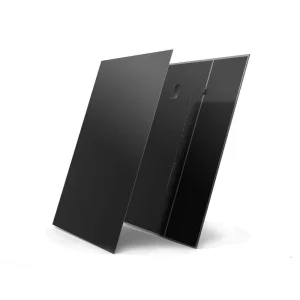
PV Glass Panels Factory & Products serving the Greece market

Pioneering High-Transmission Solar Glass and Advanced BESS Deployments for Greece's Commercial and Grid-Scale Energy Transition

Send Inquiry Now
250+
Global Partners
$50M+
Turnover (USD)
1.4+
Solar Transmittance %
100%
EU Compliance (CE/IEC)

Executive Whitepaper: Photovoltaic Glass & Battery Energy Storage Infrastructure in Greece

As the European Union accelerates towards its carbon-neutral mandate, Greece has emerged as a frontline state for renewable energy development. Backed by the Greek National Energy and Climate Plan (NECP), which aims for over 80% renewable electricity by 2030, the demand for high-efficiency solar glass panels and integrated energy storage technologies has surged exponentially. Translating raw solar irradiance into stable, dispatchable power requires not only high-performing solar PV glass panels but also complex energy storage designs that mitigate grid congestion, stabilize frequency, and enable commercial self-consumption.

1. The Hellenic Solar Market: Microclimate Challenges and Technical Demands

Greece exhibits some of the highest solar irradiance levels in Europe, with average annual direct normal irradiance (DNI) exceeding 1900 kWh/m² in Southern mainland regions, Crete, and the Aegean Islands. However, these atmospheric advantages present specific hardware challenges:

  • Thermal Derating and Thermal Stress: High summer temperatures frequently push PV module operating temperatures beyond 65°C. At these extremes, standard crystalline silicon panels suffer from efficiency degradation due to thermal coefficients. Elevating performance under these circumstances requires next-generation Photovoltaic Glass with ultra-low thermal coefficients, and advanced encapsulation techniques.
  • Marine Corrosion and Saline Mist: Many Greek solar deployments are coastal or island-based. Salt spray, humidity, and high ultraviolet (UV) indices accelerate the degradation of low-quality solar glass, causing Delamination and Potential Induced Degradation (PID). Implementing high-integrity, double-glass PV panels with anti-reflective (AR) coatings resistant to salt corrosion is imperative.
  • Dynamic Grid Congestion: The Greek Independent Power Transmission Operator (IPTO/ADMIE) faces severe grid capacity bottlenecks. Consequently, new PV project approvals are increasingly contingent upon the inclusion of co-located Battery Energy Storage Systems (BESS) to capture excess energy during peak midday generation hours and discharge it during evening peak demand.

2. Advancements in Photovoltaic Glass Engineering: BIPV & CdTe Solutions

Building Integrated Photovoltaics (BIPV) represent the future of sustainable architectural design in urban centers like Athens and Thessaloniki, as well as eco-resort constructions across the Greek archipelago. By replacing standard building cladding, glass facades, and windows with functional solar active components, structural assets are converted into vertical clean power plants.

Cadmium Telluride (CdTe) Thin-Film Technology has established itself as the premier choice for BIPV applications. Unlike traditional crystalline silicon, CdTe panels display superior spectral response under indirect or diffuse light conditions, which are common on vertical facades. Furthermore, CdTe possesses a significantly lower temperature coefficient (-0.20%/°C to -0.25%/°C) compared to standard monocrystalline cells (-0.35%/°C to -0.40%/°C). This allows CdTe panels installed on building exteriors in Greece to yield up to 10% more annual energy output under high-temperature operating conditions.

Industrial Solutions Engineered for Greek Operations

Ensuring compliance, maximizing optical efficiency, and safeguarding energy resilience under high-salinity and high-temperature environments.

Optimized LCOE Matrix

Reduces Levelized Cost of Electricity for utility scale installations on Greek islands through high transmittance solar glass and optimized CdTe structures.

Salt Mist & Wind Resistance

Fully hardened double-glass frames withstand mechanical wind loads and coastal marine salinity common in the Cyclades and Crete.

Dynamic Net-Billing Optimization

Intelligent integration with battery storages allows commercial enterprises to store cheap solar energy and dump it or use it during high-rate periods.

About ELEMRO Energy

Established in 2019 and headquartered in the high-tech hub of Xiamen, China, ELEMRO Energy has rapidly ascended as a market leader in the integration of new energy storage configurations and specialized photovoltaic glass solutions. We unify research & development, state-of-the-art factory production, and international sales pipelines under a singular standard of technical excellence.

Our global sales network spans over 250 customers across Europe, Southeast Asia, Africa, the Middle East, and the Americas. Elemro's focus on technological integrity has facilitated phenomenal revenue growth, with our annual turnover exceeding 50 million USD.

For the Greek solar industry, ELEMRO provides more than raw components. We deliver a complete ecosystem encompassing high-transmission AR-coated solar glass, CdTe thin-film BIPV modules, and scalable LFP (Lithium Iron Phosphate) battery energy storage systems (BESS). These solutions comply with stringent European grid regulations and mechanical build requirements, bridging the gap between East Asian manufacturing scale and Mediterranean energy realities.

Corporate Solutions Portfolio

  • Solar Glass: High-transparency float glass, AR coated
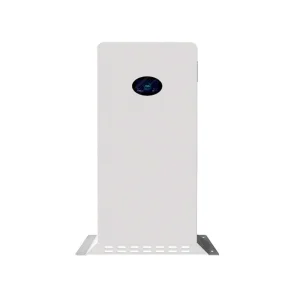
  • BESS Containers: Utility-scale 20ft & 40ft LFP storage systems
  • Solar Carports: Structural steel integrated BIPV coverings

3. Structural & Materials Engineering of Solar PV Glass

High-performance PV panels rely on complex chemical structures within the solar glass itself to maximize photons striking the active silicon layers. The solar glass must feature:

  • Ultra-High Solar Transmittance: Standard glass panels exhibit reflectance loss. By utilizing low-iron silica chemistry (typically iron content under 100 ppm), the glass attains a light transmittance profile exceeding 91.5%. When paired with single or double-sided Antireflective Coatings (ARC), transmittance peaks at 94%, ensuring maximum capture of the direct solar spectrum in Greece.
  • Tempering & Mechanical Durability: Thermal tempering changes the internal stress profile of solar glass, giving it up to 5 times the impact resistance of standard float glass. In Greek mountain areas subject to wind shear or island projects facing high gale-force winds, 3.2mm tempered solar glass or 2.0mm+2.0mm double-glass architectural modules prevent mechanical fracture.
  • Self-Cleaning Hydrophobic Interfaces: Under dry Greek summers, dust and soil accumulation (soiling) degrades solar capacity by up to 15%. Applying titanium dioxide (TiO2) coatings or hydrophobic surface finishes enables rain to wash away particulates, sustaining optimal solar yields with minimal maintenance costs.

4. Grid Stabilisation and Energy Autonomy in Greece

With the transition from net-metering to net-billing frameworks in Greece, the financial yield of purely solar-producing assets has undergone significant transformation. Excess power injected into the grid during peak hours receives low compensation, while consumption during evening peak tariffs remains highly expensive.

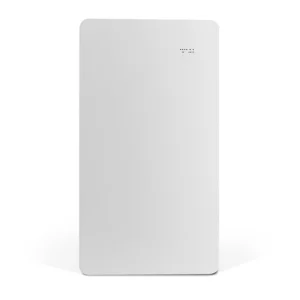
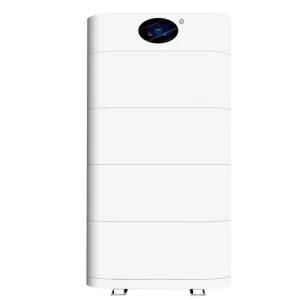
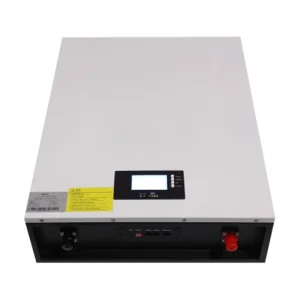
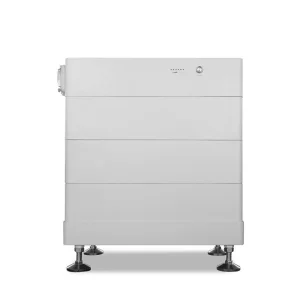
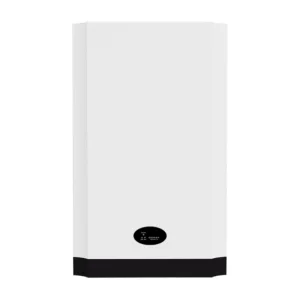
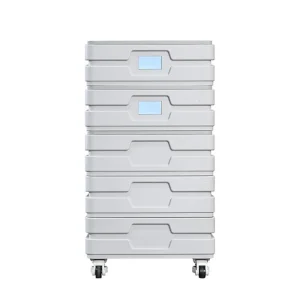
The solution lies in Commercial & Industrial (C&I) Energy Storage Systems (BESS). Implementing LFP (Lithium Iron Phosphate) battery banks with battery management interfaces (BMS) allows businesses to perform peak shaving and load shifting. Commercial facilities, manufacturing plants, and luxury hotels on islands like Mykonos or Santorini can operate in near-total energy autonomy, protecting critical equipment from grid frequency swings or unexpected load shedding.

5. Strategic Roadmap: The Transition towards Perovskite Tandem & Smart Glass

The solar glass domain is progressing beyond passive structural envelopes towards dynamic optical management. The roadmap for European and Greek projects is centered on:

  • Perovskite-Silicon Tandem Integration: Layering high-bandgap perovskite cells with low-bandgap silicon under protective glass structures breaks the Shockley-Queisser theoretical efficiency limit of 29.4%, pushing commercial module efficiencies past 30%.
  • Electrochromic & Thermochromic Smart Glass: In architectural facades, intelligent solar glass can dynamically shift transparency states in response to solar radiation levels, minimizing the indoor cooling loads of commercial structures in southern Greece while producing clean energy.

Technical FAQ & Procurement Guidance for Greece

Expert insights regarding import compliance, structural selection, battery safety, and local Greek grid integration rules.

What certifications must PV glass and battery products hold for import and operation in Greece?
All solar components and storage systems must carry the CE Mark and conform to European Union low-voltage, electromagnetic compatibility (EMC), and pressure equipment directives. Specifically, PV glass modules must comply with IEC 61215 (design qualification and type approval) and IEC 61730 (safety qualification). For battery systems, IEC 62619 (safety for industrial lithium batteries) and EN 50549 (grid connection requirements for generating plants) are mandatory for legally connecting to the Hellenic Electricity Distribution Network (HEDNO/DEDDIE).
Why is double-glass (dual-glass) architecture preferred for coastal installations in Greece?
Coastal environments in Greece expose solar arrays to severe salt spray, moisture, and high thermal stress. Traditional panels with plastic backsheets degrade rapidly due to moisture permeation, leading to corrosion of the internal circuit paths. Double-glass modules use glass on both the front and rear faces, creating an impermeable barrier against salt mist, preventing PID (Potential Induced Degradation), and enhancing mechanical strength against wind loads up to 5400 Pa.
How does the change in Greece's Net-Metering policy affect BESS requirements?
Greece has transitioned from traditional Net-Metering to a Net-Billing system. Under net-billing, solar generation exported during peak production hours is compensated at wholesale market rates, which are low during midday. By adding a Battery Energy Storage System (BESS), owners can store this midday solar excess and consume it later during evening hours, maximizing self-consumption economics and reducing reliance on high grid tariffs.
What is the expected operating lifetime and degradation rate of CdTe BIPV glass?
Premium CdTe thin-film BIPV glass modules engineered by ELEMRO carry an operational warranty of 25 to 30 years. The annual degradation rate is typically below 0.5%, meaning the system will retain over 80% of its nominal capacity at the end of its 30-year lifecycle, even under intense Mediterranean UV exposure.
How does ELEMRO ensure factory quality and lead times for Greek distributors?
We implement stringent ISO 9001 quality management protocols across our manufacturing facilities in China. By managing our raw silica and lithium cell supply chains, we maintain competitive production timelines. Ocean freight is coordinated directly from Xiamen Port to major Greek harbors, including Piraeus and Thessaloniki, ensuring delivery times and customs clearances are minimized.
Elemro Brand Partner Elemro Brand Partner Elemro Brand Partner Elemro Brand Partner Elemro Brand Partner Elemro Brand Partner Elemro Brand Partner

Ready to Engineer Your Renewable Infrastructure?

Partner with ELEMRO Energy for your utility, commercial, or residential developments in Greece. Our engineering team provides custom architectural analyses, BESS dimensioning, and logistics support to ensure project bankability.

Send Inquiry Now