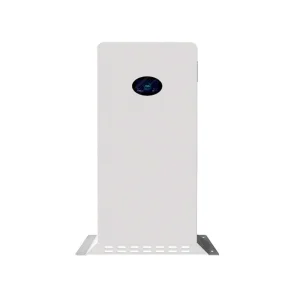
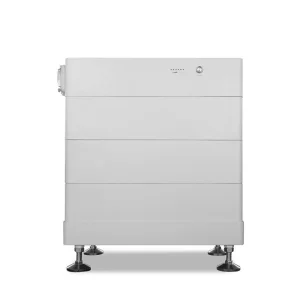
Engineered to deliver exceptional cyclic stability, microgrid compatibility, and maximum lifetime value.
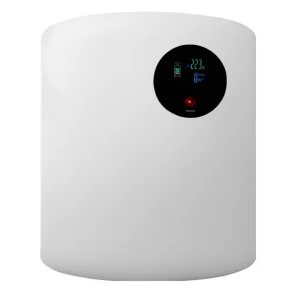
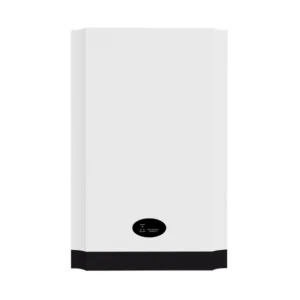
Established in 2019 and headquartered in the high-tech green-energy corridor of Xiamen, China, ELEMRO Energy has solidified its position as an industry-leading manufacturer and developer of new energy storage and integrated electrical solutions. By integrating state-of-the-art Research & Development, advanced lean manufacturing, and global direct distribution, we deliver highly reliable systems optimized for the challenges of next-generation grids.
With an active customer ecosystem spanning over 250 industrial partners in Europe, Southeast Asia, Africa, the Middle East, and the Americas, ELEMRO's annual turnover for the year 2023 surpassed 50 million USD, maintaining a consecutive multi-year growth pattern driven by technological innovation and strict quality control protocols.
"We provide cleaner energy for a greener world." This directive shapes our R&D roadmap, targeting higher power densities, reduced operational expenses (OpEx), and complete safety throughout the lifecycle of every lithium-ion and BIPV system.
Integrating architectural aesthetics with industrial-grade grid services.
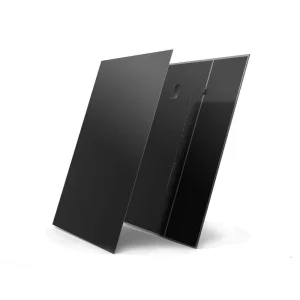
Highly transparent, structurally sound photovoltaic glass designed for seamless architectural integration, offering optimization in light transmittance and building insulation.
Megawatt-scale turnkey containerized battery systems featuring liquid-cooling heat management, integrated fire suppression systems, and double-layered isolation enclosures.
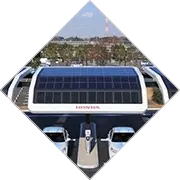
Pre-engineered structural parking systems optimizing ground utilization, serving both EV fleet charging infrastructure and localized microgrid power generation.
A comprehensive analytical overview of battery technologies, application scenarios, and the Levelized Cost of Storage (LCOS).
The transition toward high-efficiency utility and residential energy storage systems (ESS) is dominated by Lithium Iron Phosphate (LiFePO4) cell chemistry. Compared to conventional Nickel Manganese Cobalt (NMC) cells, LFP displays inherent safety properties due to its higher thermal runaway threshold (typically >270°C) and robust structural integrity under cycling conditions. Our factories utilize high-density prismatic cells to achieve more than 6,000 charge-discharge cycles at 80% Depth of Discharge (DoD), lowering the lifetime cost per kilowatt-hour stored.
Simultaneously, Building Integrated Photovoltaics (BIPV) are shifting paradigms. By leveraging Cadmium Telluride (CdTe) thin-film solar cell technologies, structures harness broader light absorption spectra. This technology functions efficiently under low-light diffuse conditions and maintains structural integrity in extreme temperature coefficients, turning vertical building facades into active power plants.
"The shift to high-voltage stackable battery systems is not merely structural; it is an engineering optimization. By minimizing cable cross-sections and copper usage, installers achieve lower overall systemic losses and improve conversion efficiency by up to 2.5%."
Purchasing teams face complex integration challenges when sizing solar energy projects. To optimize system deployment, they must focus on several parameters:
Our Xiamen manufacturing infrastructure leverages intelligent, automated factory configurations to optimize efficiency and maintain reliability. Our processes include:
Different markets present distinct design requirements:
Connect with our technical application engineers to evaluate system compatibility and request custom quotes within 24 hours.
Analyzing grid-integration paradigms, inverter setups, and chemistry characteristics.

Addressing core technical questions from engineering teams, project developers, and procurement executives.
Lithium Iron Phosphate (LiFePO4) exhibits strong thermal stability and chemical resilience. It features a thermal runaway threshold exceeding 270°C and maintains structural stability over extended cycling. Additionally, LiFePO4 contains no cobalt, eliminating supply chain risks and offering an environmentally sustainable material profile.
High-voltage battery stacks operate at elevated operating voltages, which reduces the required current flow for a given power output. This allows for thinner cabling, minimizes thermal loss, and improves systemic efficiency. The modular, stackable design also simplifies installation and enables incremental capacity expansion.
Cadmium Telluride (CdTe) thin-film cells offer distinct advantages in building-integrated photovoltaics. They absorb diffuse and low-angle sunlight more effectively than crystalline silicon, perform consistently in high-ambient-temperature environments, and integrate easily into vertical facades, turning standard architectural elements into active energy generators.
Standard certifications include IEC 62619 for lithium safety, UL 1973 for stationary energy storage application, UN 38.3 for transport safety, and local grid connection certificates such as CE and UL 9540A. Conformance to these standards ensures safe installation and rapid grid-connection approvals.
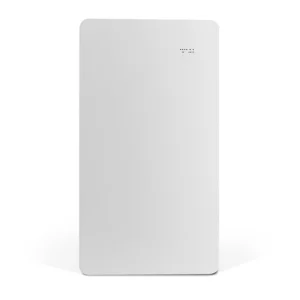
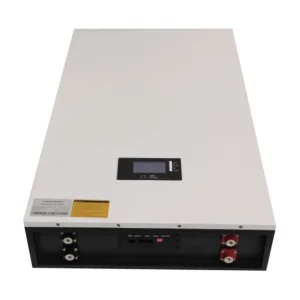
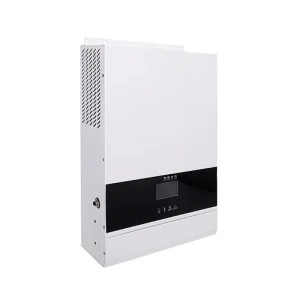
Explore our highly integrated battery packs and grid infrastructure components.
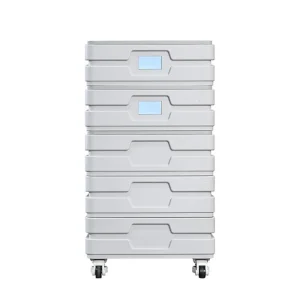
ELEMRO partners with top Tier-1 material suppliers and test laboratories to maintain consistency across our manufacturing footprint.





 Elemro Energy