Deploy industrial-grade clean energy solutions optimized for safety, efficiency, and round-trip performance.
As the international power grid undergoes a rapid decarbonization transformation, traditional spinning reserves are increasingly failing to handle the volatile frequency changes brought by gigawatts of solar and wind generation. Containerized Battery Energy Storage Systems (BESS) have transitioned from simple peak-shaving units into structural necessities for high-availability grids, industrial zones, data centers, and clean energy parks worldwide.
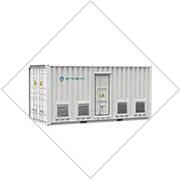
By standardizing large-scale lithium-ion battery blocks (typically LiFePO4 chemistry) into structural ISO shipping containers, manufacturers can now ship megawatt-scale power systems pre-wired, pre-tested, and ready to interconnect. This containerized design offers critical benefits: it drastically cuts down on-site civil and electrical installation times, encapsulates risk through modular fire protection, and provides an all-weather enclosure that functions reliably from dry Middle Eastern deserts to damp sub-polar regions.
In Europe, soaring electricity prices and strict national carbon pricing mechanisms have made utility-scale and Commercial & Industrial (C&I) containerized battery storage highly profitable. BESS is now widely used for primary frequency control (FCR) and secondary reserves. Meanwhile, in North America, grid congestion combined with regional transmission organizations' (RTOs) market arbitrage schemes has led to a major demand for 20-foot and 40-foot modular storage systems.
Globally, project developers are shifting their procurement strategy. Instead of sourcing individual batteries, inverters, and fire suppression systems separately, they now prefer unified, single-manufacturer integrated container solutions. This shift helps reduce system interface risks and clarifies warranty responsibilities down the road.
China is the global leader in battery manufacturing, accounting for more than 75% of the world's lithium-ion battery cell production capacity. This massive scale creates a highly integrated supply chain that covers everything from raw material processing to advanced active material synthesis, cell manufacturing, and intelligent packaging.
Direct integration with top-tier battery cell suppliers ensures that every cell in the container has matched capacity, identical internal resistance, and traceably high cycle-life metrics.
Specialized liquid-cooling manifolds keep cell-to-cell temperature variations under 3°C, extending battery life by up to 20% compared to traditional air-cooled configurations.
Based in the coastal manufacturing hub of Xiamen, China, Elemro leverages world-class deepwater shipping terminals to export heavy containerized freight safely and cost-effectively.
This geographic clustering allows energy storage container manufacturers to achieve exceptional efficiency. From structure fabrication and structural reinforcing to integration with advanced battery modules, battery management systems (BMS), energy management systems (EMS), HVAC cooling systems, and aerosol/gas fire suppression systems—everything is executed in a highly coordinated production line. Elemro Energy, established in 2019 and headquartered in Xiamen, leverages this advanced regional ecosystem to supply robust, internationally compliant systems to over 250 enterprise clients globally.
Industrial applications for energy storage containers vary significantly by geographic location, grid architecture, and local utility regulations. Here are the core scenarios where Elemro container systems provide the highest economic value:
In regions like Germany, California, and various East Asian industrial zones, utilities impose steep demand charges based on the peak power draw of a factory. A 20ft LFP Energy Storage Container can monitor real-time building load. When power demand spikes due to heavy machinery startup, the system instantly discharges to cap the grid draw. In addition, it stores energy during off-peak hours (nighttime) and discharges it during peak pricing periods, maximizing utility bill savings.
Renewable power plants often face grid limitations and curtailment during high-generation periods. Interconnect agreements frequently restrict the amount of electricity fed back into the transmission lines. Integrating an energy storage container at the substation level stores excess clean energy, which can then be dispatched during periods of low generation or high electricity prices. This turns volatile, weather-dependent generation into predictable, dispatchable power.
For remote operations like mining sites, island resorts, and agricultural operations, diesel generator sets have historically been the only source of reliable power. However, running diesel generators is expensive and logistically challenging. Integrating an Elemro energy storage container with a solar PV array allows operators to run generators at peak efficiency, and even shut them down completely during solar-dominant hours. This can reduce overall diesel consumption by up to 60%.
The rapid expansion of electric vehicle (EV) charging infrastructure is putting a strain on distribution grids. When multiple high-power DC chargers (each pulling 150 kW to 350 kW) operate simultaneously, they can cause voltage instability. Installing a localized energy storage container acts as a buffer. It charges slowly from the grid during quiet periods and delivers high-current output to vehicles during charging sessions, protecting local grid assets from overload.
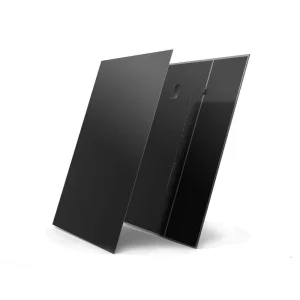
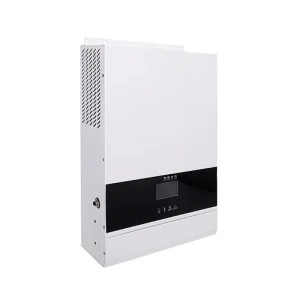
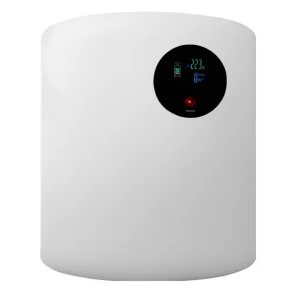
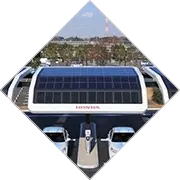
Integrating solar cell materials, specialized backup batteries, and commercial-grade storage systems.

The pace of technological innovation in utility-scale energy storage remains high. To maintain competitiveness, BESS procurement teams must track three critical trends:
Established in 2019, headquartered in Xiamen, China, Elemro Energy has been specialized in new energy storage and electrical product solutions with rich experience. It is the market leader in the new energy industry that unifies R&D, production, and sales. The products have been sold to more than 250 customers in Europe, Southeast Asia, Africa, Mid-east, America, etc. Since its establishment, ELEMRO’s revenue has been growing rapidly every year. ELEMRO’s annual turnover is expected to exceed 50 millions USD in year 2023.
Evaluating and sourcing industrial energy storage containers requires a rigorous, multi-faceted approach. A container system is a 15-to-20-year asset, and procurement teams must analyze key metrics beyond the initial purchase price (CAPEX):
The lifetime LCOS is the most accurate metric of system value. It accounts for capital expenditure, ongoing operation and maintenance (O&M) costs, and efficiency losses. A system with high round-trip efficiency (typically >88% AC-to-AC) minimizes energy losses during charging and discharging, directly improving project returns.
Lithium-ion cells degrade naturally over time. Sourcing teams should look for clear, transparent degradation curves linked to cycle counts and depth of discharge (DoD). High-quality manufacturers like Elemro guarantee retention of at least 70% capacity after 6,000 to 8,000 cycles (under standard 0.5C/0.5C operation at 25°C), ensuring long-term project performance.
Modern BESS containers must comply with local grid connection standards. Systems should feature smart, grid-forming inverters capable of providing voltage support, frequency ride-through, and rapid black-start capabilities. Sourcing compliant, pre-certified hardware helps minimize on-site commissioning delays.
Deep technical answers to aid engineering design and procurement decisions.
Contact our engineering support team for detailed design calculations, structural drawings, and custom pricing within 24 hours.
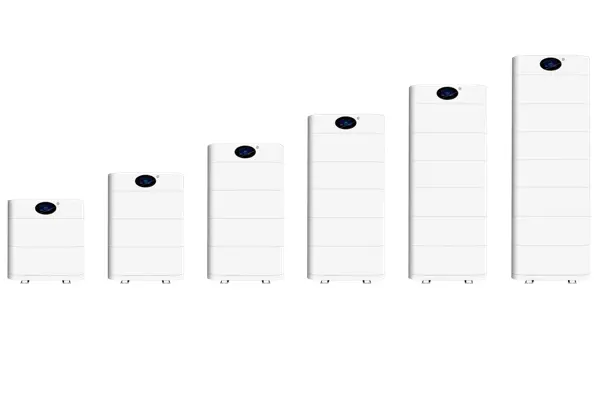
Inquiry For PricelistHigh-density energy modules and residential-to-utility backup options.





 Elemro Energy