 Elemro Energy
 Solar Glass Systems
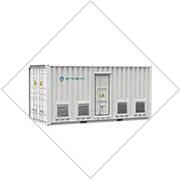 Energy Storage Container
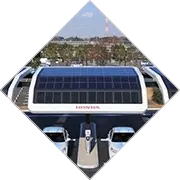 Car Port Solar Power
Strategic Analysis & Technical Whitepaper on 8kW Battery Storage Systems
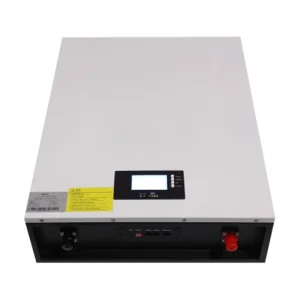
The global transition from centralized utility infrastructure to localized microgrids has placed energy flexibility at the heart of industrial and residential engineering. Among the various capacity nodes, the 8kW battery storage system (typically paired with a 10kWh to 20kWh LiFePO4 battery pack) has emerged as the definitive global sweet spot. This technical guide explores the commercial landscape, manufacturing standards, chemistry routes, and future horizons governing 8kW BESS integrations.
1. Global Commercial and Industrial Market Dynamics of 8kW Storage
The global demand for 8kW BESS configurations has experienced exponential growth due to changing utility tariff structures and grid instability. In highly developed residential energy sectors such as Germany, Italy, and Australia, time-of-use (ToU) tariffs and the phasing out of traditional solar feed-in tariffs (FiTs) have compelled asset owners to maximize their self-consumption ratios. A modular 8kW inverter with a high-capacity stackable battery is ideal for matching peak generation profiles to home energy usage.
In regions with weak grids, such as South Africa and parts of Southeast Asia, 8kW battery storage serves a dual role: it operates as a primary backup power source during load-shedding events and acts as a grid stabilizer. These systems utilize advanced peak-shaving algorithms to draw power from the grid only during off-peak hours, discharging during peak load rates to reduce energy expenditures.
2. Advanced LFP Battery Chemistry & Safety Roadmap
Modern 8kW battery storage factories utilize Lithium Iron Phosphate (LiFePO4) chemistry as their primary cell technology. Unlike traditional Nickel Manganese Cobalt (NMC) chemistries, LFP offers key safety advantages:
- Thermal Runaway Margin: LiFePO4 boasts a high thermal runaway threshold (approx. 270°C), making it highly resistant to combustion under puncture or thermal stress.
- Cycle Life Metrics: Grade-A LFP cells manufactured by ELEMRO yield over 6,000 complete cycles at 80% to 90% Depth of Discharge (DoD), ensuring an operational lifespan exceeding 15 years.
- Eco-Friendly Composition: LFP cells eliminate hazardous materials such as Cobalt, simplifying end-of-life recycling workflows and complying with strict EU RoHS regulations.
3. System Architecture: High Voltage (HV) vs. Low Voltage (LV) Topologies
When sourcing systems from leading 8kW battery storage factories, engineers must evaluate whether a High-Voltage (HV) or Low-Voltage (LV) configuration is best suited for their projects:
| Feature | Low Voltage (48V Systems) | High Voltage (100V-400V Stacked) |
|---|---|---|
| System Efficiency | Moderate (~92-94%) due to higher current losses. | Excellent (>97%) with lower current levels. |
| Installation Complexity | Lower risk, easier plug-and-play installation. | Requires professional DC balance wiring. |
| Scalability Options | Parallel connections increase total capacity (Ah). | Series connections raise total voltage (V). |
4. Localized Application Scenarios & Engineering Case Studies
Scenario A: BIPV and Net-Zero Home Integration in Central Europe
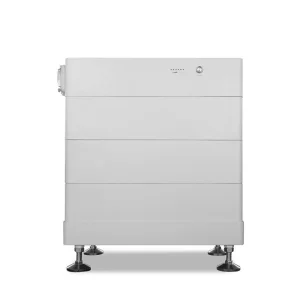
By integrating Elemro CdTe Cadmium Tellurium Thin Film Solar Cells with a high-voltage stackable LFP storage system, European developers can build net-zero energy houses. The 8kW hybrid inverter manages both BIPV inputs and battery storage optimization. This setup delivers reliable backup during winter while maintaining a modern, aesthetic exterior facade.
Scenario B: Extreme Weather Resilience in Rural North America
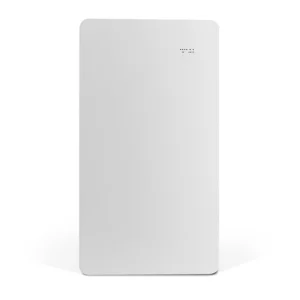
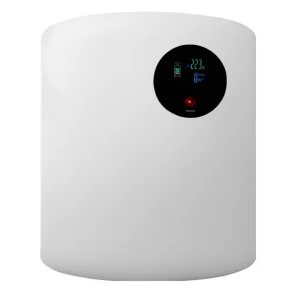
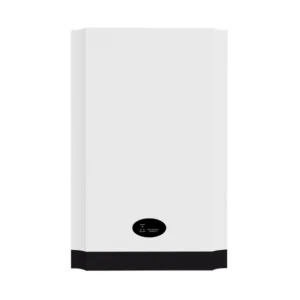
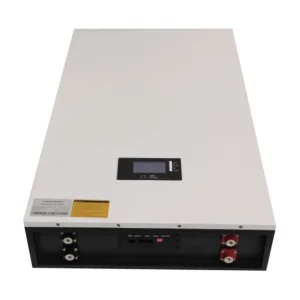
For homes in regions prone to grid outages due to blizzards or hurricanes, a wall-mounted 8kW / 14.3kWh LFP battery system acts as a resilient backup. By utilizing an automated transfer switch (ATS), the system can transition to island mode in less than 10 milliseconds, keeping medical devices, heating systems, and well pumps running seamlessly.
5. Technological Roadmap to 2030 and Future Horizons
The next decade of BESS manufacturing will focus on solid-state battery cells and smart-grid communications. The integration of AI-enabled Energy Management Systems (EMS) will allow 8kW battery units to communicate directly with local virtual power plants (VPPs). By aggregating thousands of distributed 8kW units, grid operators can discharge power back to the grid to stabilize load curves, creating a passive income stream for battery system owners.